
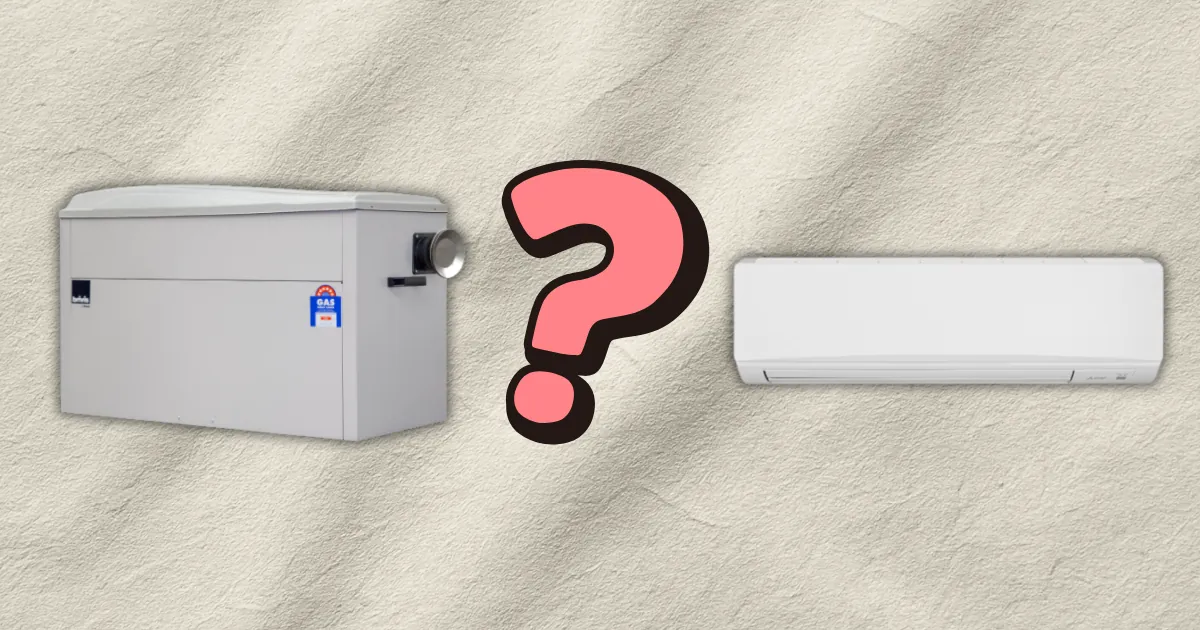
Gas vs Electric Heating in Melbourne: Which Is Better for Your Home?
Melbourne winters aren’t gentle.
One week it’s damp and bone-cold, the next you’re shivering out of bed to get the heater on wondering why the energy bill keeps climbing.
Add rising gas prices, a gas phase-out in Victoria, and a lot of homes still on the old ducted systems that are beyond their best, and it’s no surprise people feel stuck.
Gas or electric?
Should you keep what you’ve got, or rip everything out?
In this guide, you’ll know which option actually makes sense for your home, your budget, and where Melbourne heating is heading next.
Key Takeaways
- For most Melbourne homes, electric heating is going to be cheaper to run and better for the future.
- Gas still makes sense if you already have ducted gas in good condition and need to heat the whole house more often.
- The Victorian rebate systems with rising gas prices are making homeowners choose electric systems.
- The best choice depends on your home layout, existing ducting, insulation, and whether you have solar.
Contents
- 1 How Gas Heating Works
- 2 How Electric Heating Works
- 3 Running Costs in Melbourne: Gas vs Electric
- 4 Cost Per Hour (Melbourne Averages)
- 5 Seasonal Heating Costs (Melbourne Winter)
- 6 What’s happening in Melbourne
- 7 Upfront Costs and Installation Differences
- 8 Gas Heating Installation Costs in Melbourne
- 9 Electric Heating Installation Costs in Melbourne
- 10 Maintenance, Lifespan, and Long-Term Ownership
- 11 Which Heating Is Best for Different Melbourne Homes
- 12 Gas vs Electric Heating Comparison Table
- 13 What’s better, Gas or Electric Heating for Melbourne Homes?
- 14 Common Questions About Split Systems Not Cooling
- 15 Contact us for your heating needs in Melbourne
How Gas Heating Works
Gas heating has been the top option for Melburnians over the last few decades.
A lot of homes already have it, especially those older homes with ducting.
At a basic level, gas systems burn natural gas (or LPG) to create heat, then push that warm air through ducts or directly into rooms.
It’s a simple process.
But the tide has turned in Victoria.
Common Gas Heating Types
Gas ducted heating
This still dominates Melbourne’s suburbs. A central gas heater sits in the roof or it’s outside the home against a wall and distributes warm air through ducts to vents in each room.
It’s still an extremely powerful system for whole-home heating, especially in larger houses.
Gas wall furnaces
These are older systems, but still relatively common, generally found in units, townhouses, or homes built decades ago.
They heat one main area and rely on heat drifting through the house. Cheap to install back in the day, but are not efficient or cost-effective compared to today’s options.
Pros of Gas Heating
Fast heat
Gas heats air quickly. On a freezing Melbourne morning, there’s no better feeling than than turning on the ducted gas heating due to it’s powerful warmth compared to most electric options.
Strong for large homes
If ducting is there and it’s sized properly, gas heating will dominate those large homes and high ceilings.
Works with existing ductwork
When the ductwork is intact many remain with gas because it’s reliable and offers long-lasting heating.
Cons of Gas Heating
Rising gas prices
Gas in Victoria is costing more as the years go on. Over the next 5 years it will get worse compared to electric.
Safety and servicing
Gas systems need annual servicing.
There’s also the risk of carbon monoxide if you haven’t serviced it in over 2 years, however you should be getting a service each year anyway.
Gas phase-out risk in Victoria
Gas isn’t being banned overnight, but the restrictions are adding up as the years go on.
New builds for residential and most commercial builds are moving away from gas starting 2027.
The government is always increasing incentives to switch over.
That uncertainty matters if you’re installing a system you expect to last 15–20 years.
How Electric Heating Works
Electric heating has not been static.
When some people hear “electric,” they still think old bar heaters or panel heaters are costly to run.
Modern heating is much different nowadays.
Electric heating in Melbourne usually means reverse cycle systems which provide heating and cooling.
These heat the air by moving it around rather than creating it leading to better costs and efficiency.
Common Electric Heating Types
- Reverse cycle split systems
Split systems are probably the most common option with one outdoor unit, one indoor unit per room or zone. They’re highly efficient at heating a specific area rather than a whole home. - Reverse cycle ducted systems
These work like ducted gas but run on electricity. A central unit pushes warm air through ducts to the entire home. Popular in newer builds and full-home upgrades, especially where gas isn’t an option.
Pros of Electric Heating
- Lower running costs
Modern reverse cycle systems are substantially cheaper than gas heaters. Melbourne residents love the savings on their winter bills. - Solar compatible
It’s a no brainer if your home has solar, electric heating makes even more sense. You can heat your home using energy you’re already generating, which gas simply can’t do. - Government rebates
If you’re considering electric, Victoria is really wants you to get it, offering substantial savings. Rebates and incentives can significantly reduce upfront costs, especially when replacing older gas systems.
Cons of Electric Heating
- Higher upfront cost
Installing electric heating, especially ducted systems, will certainly cost more than replacing your old gas heater. Some don’t want the trade-off. - Needs correct sizing
Don’t just hire anyone to install your electric systems as it must be sized properly. Undersized units won’t keep up in those cold Melbourne mornings, particularly in homes with poor insulation or high ceilings. - Not instant heat in large open homes
Electric heating is efficient, but it doesn’t deliver the powerful warmth quickly that you know and love from gas systems, especially in bigger open plans.
Running Costs in Melbourne: Gas vs Electric
This is where most people change their mind.
Gas used to be cheaper, but in today’s climate, with current energy prices, that’s no longer true for a lot of households.
Especially once you factor in how people actually use heating during winter.
Below are realistic ranges:
Cost Per Hour (Melbourne Averages)
| Heating Type | Typical Cost Per Hour (AUD) |
|---|---|
| Gas ducted heating | $1.80 – $3.00 |
| Gas wall furnace | $1.50 – $2.50 |
| Reverse cycle split system | $0.40 – $0.80 |
| Reverse cycle ducted system | $0.70 – $1.20 |
Electric wins clearly on hourly running cost, especially for zoned or room-by-room heating.
Seasonal Heating Costs (Melbourne Winter)
Most Melbourne homes run heating for around 4–6 hours per day during winter, across roughly 4 months.
| Heating Type | Estimated Winter Cost (AUD) |
|---|---|
| Gas ducted heating | $900 – $1,600 |
| Gas wall furnace | $700 – $1,200 |
| Reverse cycle split systems | $350 – $700 |
| Reverse cycle ducted system | $600 – $1,000 |
If you’re using heating all day, you’ll be at the top of these ranges.
Homes that heat only occupied rooms will be towards the bottom end of the ranges.
What’s happening in Melbourne
Gas prices in Victoria have risen steadily, while electric systems have become far more efficient.
Reverse cycle systems don’t “create” heat the way gas does. They move it, which is why they use less energy overall.
If your home has solar, the numbers shift even further toward electric.
Daytime heating can be partially or fully offset by solar generation, something gas can never compete with.
Upfront Costs and Installation Differences
Upfront cost is where gas can still look attractive at first glance.
But it depends heavily on what’s already in your home and whether you’re replacing like for like or starting fresh.
Upfront Costs: Gas vs Electric Heating in Melbourne
| Cost Factor | Gas Heating | Electric Heating |
|---|---|---|
| Typical install (existing system) | $2,000 – $6,000 (ducted gas replacement) | $2,500 – $4,500 per split system |
| Full system install | $7,000 – $12,000+ with new ducting | $8,000 – $15,000+ for ducted reverse cycle |
| Works with existing ductwork | Yes | Only if ducts are suitable |
| Electrical upgrades required | No | Sometimes ($500 – $1,500 in older homes) |
| Annual servicing cost | $250 – $350 per year | Low – typically basic maintenance only |
| Installation complexity | Lower if replacing like-for-like | Higher planning but more flexibility |
| Government rebates | None | Strong Victorian incentives available |
| Upfront cost after rebates | Usually higher long-term | Often comparable or cheaper |
Gas Heating Installation Costs in Melbourne
Gas heating installation costs in Melbourne typically range from $2,000 to $6,000 when replacing an existing ducted gas system using the same ductwork.
Find out more precise costs in our gas ducted heating replacement cost guide.
If new ducting is required or the system is being fully upgraded, costs can climb to $7,000 to $12,000+.
Ongoing annual servicing, usually $250 to $350 per year, should also be considered as part of the long-term cost.
Electric Heating Installation Costs in Melbourne
Electric heating installation costs in Melbourne depend on the system type.
Reverse cycle split systems usually cost $2,500 to $4,500 per room, while ducted reverse cycle systems range from $8,000 to $15,000+ for full-home installs.
In some homes, electrical upgrades of $500 to $1,500 may be needed, but Victorian rebates can significantly reduce the final upfront price.
Maintenance, Lifespan, and Long-Term Ownership
The upfront cost is only part of the story.
How long a system lasts, how often it needs attention, and what it costs to keep running safely all matter just as much over time.
Gas Heating Lifespan
- When maintained correctly most gas heating systems in Melbourne last around 15 to 20 years.
- Gas heaters servicing should be conducted every year. Safety and efficiency are the most important factors. Things like carbon monoxide testing, heat exchanger checks, and airflow inspections are important with aging systems.
- Gas heating repair may become more common over time leading to an eventual replacement at some point.
Electric Heating Lifespan
- Electric heating systems, including reverse cycle split and ducted systems, typically last 10 to 15 years in Melbourne homes. Find our exactly how long split systems last in Melbourne.
- Most split system maintenance involves basic checks and cleaning rather than annual safety servicing. Parts may get worn out and lead to
- For many households, lower maintenance and fewer unexpected repair costs make it more ideal for customers to own that gas heating.
Will gas be banned in Victoria?
No, not right now but possibly at some point. Gas heating isn’t being suddenly banned, and homeowners aren’t required to remove their existing gas systems.
If your home already has gas, you can rest assured, you’ll be fine.
The biggest changes are that new builds will be required to be all-electric, many of which are now designed without gas connections.
For existing homes, the “phase-out” mainly means that new gas connections will be gone, rising prices, and less long-term support for the gas systems.
So this means electric systems are more future-proof.
Which Heating Is Best for Different Melbourne Homes
There’s no single “best” heating system for every home.
Below are some typical setups that can help you.
Apartments and Units
Winner: Electric
Electric heating is almost always the better choice for apartments and units in Melbourne.
Space is limited, ducting is rare, and heating is usually needed in specific rooms rather than the whole dwelling.
Reverse cycle split systems are efficient, easy to install, and cheap to run compared to gas.
Single-Storey Homes
It depends
For single-storey homes, the right option depends on what’s already there.
Homes with existing ducted gas in good condition may find gas replacement cheaper upfront.
Homes without ducting, or with ageing systems, often suit electric split systems or ducted reverse cycle, especially when rebates are factored in.
Double-Storey Homes
Depends on ducting
Double-storey homes need consistent heat across levels, which is where ducting matters.
If ducted gas is already installed and sized correctly, gas can still perform well.
If not, electric ducted systems or a combination of split systems usually deliver better control and lower running costs long term.
Homes With Solar
Winner: Electric
If your home has solar, electric heating makes the most sense.
Reverse cycle systems can integrate with the energy you’re generating reducing running costs.
Electric is the clear winner for solar-equipped Melbourne homes because gas can’t connect.
Gas vs Electric Heating Comparison Table
| Factor | Gas Heating | Electric Heating |
|---|---|---|
| Running cost | Higher and rising | Lower, especially with zoning |
| Install cost | Lower if replacing existing system | Higher upfront, rebates reduce cost |
| Lifespan | 15–20 years | 10–15 years |
| Maintenance | Annual servicing required | Annual servicing required |
| Safety | Requires gas and carbon monoxide checks | No combustion risks |
| Performance | Fast heat, strong for large homes | Efficient, better room control |
| Solar compatible | No | Yes |
| Government incentives | Limited | Strong Victorian rebates |
| Future viability | Declining long-term support | Preferred long-term option |
What’s better, Gas or Electric Heating for Melbourne Homes?
For most Melbourne homes in 2026, electric heating takes the cake.
It’s cheaper to run, easier to maintain, works with solar, and lines up with where energy policy is heading in Victoria.
Gas can still make sense in specific situations, mainly where ducting already exists and whole-home heating is used heavily, but for new installs and system replacements, electric is usually the smarter long-term option.
Common Questions About Split Systems Not Cooling
Is gas heating being phased out in Victoria?
Gas heating isn’t being banned overnight in Victoria. Existing homes can keep using and servicing gas systems as normal. The “phase-out” mainly affects new builds and long-term policy, with fewer new gas connections and more incentives to switch to electric over time.
Is electric heating cheaper than gas in Melbourne?
In most cases, yes. Modern electric heating, especially reverse cycle systems, is cheaper to run than gas for Melbourne homes. The gap is even bigger if you heat only the rooms you use or have solar installed.
Can I replace gas heating with electric?
Yes. Many Melbourne households are replacing gas systems with electric heating when their old units reach end of life. Depending on the home, this might mean installing split systems, ducted reverse cycle, or a mix of both. Rebates often help reduce the upfront cost.
What heating works best in Melbourne winters?
Reverse cycle electric heating works best for most Melbourne winters. It handles cold mornings well, is efficient to run, and suits both small and large homes when sized correctly. Gas can still work well in larger homes, but electric is now the more common choice for new installs.
Contact us for your heating needs in Melbourne
Are you still unsure about gas or electric? It’s best to get professional advice.
Every Melbourne house is different, and the right system depends on layout, insulation, existing services, and how often you use your heating.
Whether it’s gas heating installation or reverse cycle heating, reach out to chat through your options and get clear, honest guidance before making a decision.